

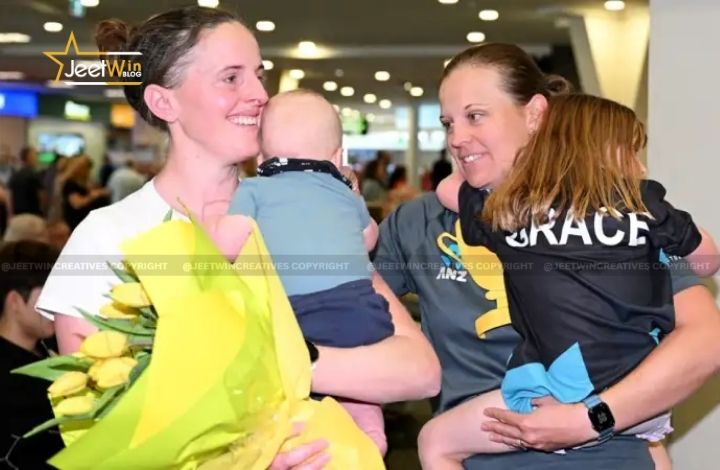
The International Cricket Council, on 22 June 2026, released a new set of guidelines to facilitate the return of female cricketers to the game after pregnancy. This global framework gives players, member boards and medical staff a clear pathway to return to elite cricket after childbirth. The initiative aims to support player welfare as women’s cricket continues to grow professionally around the world.
Supporting her through every stage of the cricketing journey 🙌
The ICC’s Return to Play Post-Pregnancy Guidelines reflects cricket’s commitment to creating an environment where female players are empowered to return to the game safely, confidently and with the support they… pic.twitter.com/XwWigaDc2b
— ICC (@ICC) June 22, 2026
The ICC developed these guidelines to ensure that starting a family does not end a woman’s sporting career. Therefore, the policy offers a practical structure for physical recovery, psychological support, and cricket-specific training. This move is part of the ICC’s “100% Cricket” movement, which focuses on player health and normalising important health conversations in sports.
The 6 Rs Framework for Returning to Play
The “6 Rs” framework is introduced in the new policy. The six-stage model guides a player through every step of her journey back onto the pitch.
SN
Stage
Action
1
Ready
Focused on the immediate early recovery phase following a player’s return from postpartum
2
Review
A detailed assessment of the player’s health by medical experts
3
Restore
The player starts a progressive return to physical training
4
Recondition
Coaches provide cricket-specific condition to prepare the body for the demands of the sport
5
Return
The player is back competing in matches
6
Refine
The player will continue to be monitored by medical teams in the full cricket environment
Practical Support for Female Athletes
The guidelines suggest that the cricket boards provide specific physical and logistic support. Boards should provide flexible training environments and continued access to medical facilities. The ICC also emphasizes the need for advice on child care and travel assistance for mothers and babies.
Playing venues also need to adapt to help mothers. The guidelines suggest that stadiums provide suitable spaces for feeding or caring for babies. Consequently, these measures help remove the barriers that might stop a talented player from returning to international duty.
Dedicated Case Management and Medical Teams
In order to effectively deal with this process, the ICC recommends that each player have a dedicated Case Manager. This person is usually a physiotherapist or doctor and is the main contact. The Case Manager coordinates support services and ensures that all decisions are made with the health of the mother and baby as a priority.
Here are some of the key takeaways from the ICC’s post-pregnancy guidelines: https://t.co/5tf14EdKHV pic.twitter.com/rhxSMfu3vR
— Cricbuzz (@cricbuzz) June 22, 2026
Moreover, the ICC recommends regular management meetings at specific times. Meetings should be held when a player first announces she is pregnant, during the third trimester and six to eight weeks after the baby is born. Teams should be looking to review every four weeks once a player returns to training.
Rights and Decision-Making for Players
The player has the full right to announce her pregnancy at the time she prefers, as per the ICC guidelines. Also, member boards may not require players to undergo pregnancy testing. While exercise during pregnancy is encouraged, the player and her medical team must decide together when to stop competing.
Most players are advised to stop playing matches after the first trimester. But there is no set date for when a player has to stop; every pregnancy is different. These personalised decisions mean the athlete is in control of her health and career.
For more Sports news and updates, follow ZC777 Blog
